
Change is one of those business practices that remain problematic: Can resistance be avoided? Is it possible to acquire buy-in to achieve an easy rollout? Is there a scalable approach for Change Management that works for all industries and initiatives? Can the risks of change be known at the start of a project? Can implementation be trouble-free and sustainable?
Yes, to all. But current approaches begin with “Identify the problem” and overlook the essential earlier steps. Unless all relevant information is gathered from those most familiar with it, it’s not possible to accurately identify a problem. Unless or until
- everyone with firsthand knowledge/regular experience of the problem shares their experiences and offers thoughts on possible solutions;
- everyone understands and discerns ways to overcome any risks of change;
- those who will use the new solution have a say in defining the goals/objectives
implementation, buy-in, resistance and risk problems may endanger success. Indeed, without including the relevant systems, a project might fail.
In this article I’ll lay out why systems are so vital in project/change work and why problems emerge when they’re overlooked. Let’s begin with a definition of systems.
CHANGE MUST BE SYSTEMIC
Since everything exists within a system, they’re the foundational factor in all change.
- AI defines systems as a group of interacting, interrelated, or interdependent parts that function together as a whole to achieve a common purpose or goal, defined by its boundaries, structure, and the relationships between its components. [Italics mine]
- I define a system as a group of ‘things’ that include the same rules and norms that have been agreed to.
As ubiquitous components, systems characterize cultures and countries, religions and choices. By defining what we believe, notice, act on, choose and how we behave, they regulate our lives. Families, relationships, egos, clothing and professional choices, how we choose our mates and hobbies – even the way we think and make assumptions – are all dictated by our personal system of beliefs, history, and experience.
An essential component of systems is their need for balance (Systems Congruence). Without stability, a system will be at risk and resist any change. And this is where standard change management and decision-making models fail.
With a focus on changing behaviors and without managing the underlying, normative systems involved, projects face time delays, unknown risks, resistance, and lack of buy-in. Let’s now take a look at how systems show up in companies.
SYSTEMS SEEK STABILITY
Each workplace is a unique representation of its underlying systems that designate
- cultural norms and implicit rules,
- hiring and management practices,
- brand expression,
- behavioral and communication standards
- policy, expectations, dress codes, environment, and implicit norms.
Each company, each group, each person comprises unique systems, leading to great variety in behaviors, norms, and activities. Here’s an example from my own work history. In the 1980s, after working for years at Merrill Lynch – a staid, conservative international brokerage house – I took a job at a progressive brokerage house on Wall Street (run by the renegade Ray Dirks ) without dress codes. It advertised ‘penny stocks’ globally, taking orders 24/7 in all time zones. Whoever was in the office when a call came in (and LOTS of calls came in!) got the order. The company motto was posted everywhere: “Early to bed, early to rise, work like hell and advertise”. I once showed up at 2:30 a.m. in my pajamas, SO different from the suits I wore at Merrill. Other brokers had figured out the system and were also there in the middle of the night dressed in various outfits (even a bathing suit once). And we all made a ton of money.
Obviously, the foundational systems define who gets hired, what gets done, and how people behave. And when these are ignored, any change or required implementation will be at risk.
Here’s a video of me teaching a group of System Dynamics folks the importance of helping clients understand and manage their systemic elements as part of an implementation:

WHAT PUTS CHANGE AT RISK?
To fix a problem successfully, to prompt change in a way it’s retained and accepted, it’s necessary to involve the entire system. Too often, leaders seek to gather information about, and focus the change only what they consider to be the problematic behaviors (reorganize, add departments, etc.) causing imbalance and disruption, putting the system at risk.
Indeed, what appears problematic was initially built into the system as a feature and has become habituated. Any attempt to change a problem without including, and getting agreement from the elements in the originating system that triggered it will cause an imbalance – or risk.
Addressing the systemic risk factors in any change initiative or decision is a vital component of success: A system will fight to maintain the status quo rather than face disruption, regardless of the need or the efficacy of the new solution. And the time it takes to manage and determine potential risks in any new decision is the length of time it takes to be successfully implemented.
I’m familiar with a troubled mid-sized media support company that’s closing 50% less than normal from their sales leads. Instead of assembling the sales force to hear their thoughts, problems and needs, the new CEO reorganized sales – new initiatives, payouts, departments, leadership – without including the very salespeople who were experiencing, and had knowledge of, the problem. Obviously, the sales folks rebelled and refused to comply (surprise!) with their new job titles, new reporting structure, new territories. As of this writing, several top producers have quit while most of the rest are seeking new jobs.
ELEMENTS IN SUCCESSFUL CHANGE
I’ve spent much of my working life inventing systemic change models that begin by including everyone’s voice to
- share their (often first-hand) knowledge,
- offer creative ideas to problem resolution that fit their specific needs,
- highlight and brainstorm strategies to avoid risks,
- discuss and set possible goals and outcomes
to ensure balance, buy-in, group-wide inclusion, creativity, and implementation.
I’ve developed a Change Facilitation model that uses 13 steps of change and quite different from standard change models, attaining successful results by including all systems elements upfront, assuring a risk-free change, buy-in, and no resistance.

Here are the main topics of the steps that must occur before goal setting. They must be used in this order, although they may be iterated: [Note: I’m happy to coach you through this on a group coaching call: sharondrew@sharondrewmorgen.com
Where are you?
People: without including ALL people who touch the current system/problem and are involved with the new, it’s impossible to
- gather an accurate fact pattern or front-line/real-time knowledge,
- define the current beliefs, norms, assumptions at the root of the problem,
- recognize potential risks,
- enlist buy-in,
- avoid resistance.
If it’s a large company, there are certainly ways to get everyone’s voices represented.
Collaborative leadership: a top-down, leader-led, behavior-change-focused project excludes identifying the foundational beliefs, values, norms that have maintained balance and generated the problems to be solved, leading to resistance and risk.
Information gathering: with all voices included, it’s possible to gather the full fact pattern and engage ideas directly from the source. Otherwise, leaders use partial knowledge and assumptions to set goals without knowing the minefields they’ll find, often causing incongruence and risk.
Recognizing risk: with all data in hand and discussed, risks to the system (jobs, people, relationships etc.) become apparent and can be avoided and supervised beforehand.
What’s missing and why hasn’t it been fixed already?
Joint discussions, brainstorming, idea sharing, decision-making: unless all decent ideas are heard and discussed; unless all voices that touch the problem and are included in gathering, sharing, and developing ideas; until the problematic elements within the system have been identified there’s no way to understand the scope of the solution.
An essential start to any project must include recognizing how it got instigated so the underlying beliefs, policies, activities and assumptions can be reconsidered and reoriented. Example: If the rule is that customer service reps can spend no more than 4 minutes on a call, it’s difficult to reconsider customer services solutions.
What resources do we have to fix this?
Best fixes (workarounds) to avoid disruption: to ensure proposed fixes match the identified systemic factors, available resources must be considered first. It’s only when it’s determined by all that a problem can’t be fixed internally that an external solution (i.e. a purchase, a consultant) will be considered.
What are the risks of change to avoid too much disruption?
Understand and manage the risks of change: All voices of those who will be a part of a new solution must collaborate to understand and agree to the risks of change, understand how much disruption they’ll cause, and know how to mitigate them. Without knowing this in advance the project is likely face delays, garner resistance, and not enlist buy-in.
Problem identification/Goal setting
With everyone’s voices, ideas, information; with risks known and managed; with workarounds tried and rejected; it’s time to set goals (i.e. step 4, rather than step 1).
From here, standard change models can be used.
CONCLUSION
Change is far more complex than merely changing behaviors. After all, behaviors emerge from systems that have defined, approved, and maintained them and must be included for successful change without resistance.
I have invented a Change Facilitation model to ensure systemic buy-in and risk-avoidance. This will ensure projects will be on time and implemented throughout the group/company, with no resistance.
For groups wishing team coaching through the beginning of a project, or need help defining goals or getting buy-in once resistance has set in, let me help. Sharondrew@sharondrewmorgen.com
________________________________

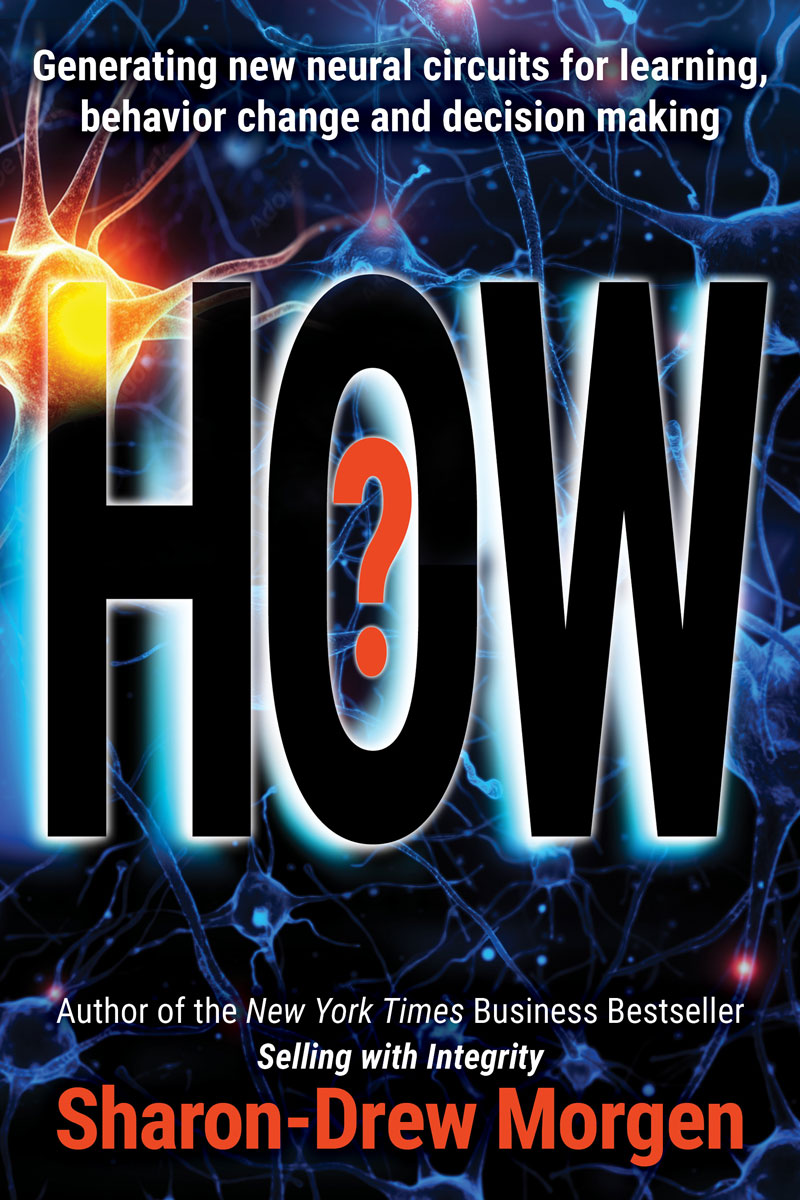
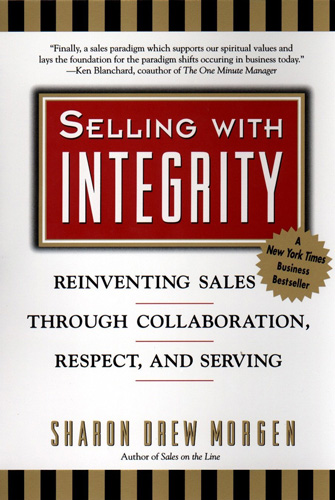
Sharon-Drew Morgen is a breakthrough innovator and original thinker, having developed new paradigms in sales (inventor Buying Facilitation®, listening/communication (What? Did you really say what I think I heard?), change management (The How of Change™), coaching, and leadership. She is the author of several books, including her new book HOW? Generating new neural circuits for learning, behavior change and decision making, the NYTimes Business Bestseller Selling with Integrity and Dirty Little Secrets: why buyers can’t buy and sellers can’t sell). Sharon-Drew coaches and consults with companies seeking out of the box remedies for congruent, servant-leader-based change in leadership, healthcare, and sales. Her award-winning blog carries original articles with new thinking, weekly. www.sharon-drew.com She can be reached at sharondrew@sharondrewmorgen.com.