


 AI is a great information aggregator and analyzer, working with historic LLMs that respond with answers taken from an amassed history of similar queries and stored knowledge. It certainly solves problems quickly that would otherwise take some time to resolve. Great for helping you diagnose an illness or providing gobs of well-resourced information.
But if you want help figuring out whether to put your mom into an assisted living center, or how to handle a depression after a breakup, AI cannot provide you with a way to manage your feelings or make values-based choices. Certainly, it can provide you words to help you feel better, or ideas others have used. But solve the problem? Nope.
WHEN IS INFORMATION NEEDED?
A standard assumption is that ‘information’ is foundational in decision making. But it’s needed ONLY in the final stages, after the beliefs, norms, history, assumptions and unconscious goals are considered and the risks of change are managed. Using the dilemma I cited above, you wouldn’t need information about local assisted living centers unless you’ve decided it’s time to put your mom in one.
When outsiders offer information too soon, it’s usually based on their needs and assumptions, often causing resistance when it goes against the person’s beliefs and values, history and assumptions. This is what happens when sellers pitch, leaders push change, coaching offer suggestions as potential convincers before need for it has been fully unpacked.
WHAT IS A DECISION?
Let me explain what a decision is to help you recognize the problem with using information as the main, and in the case of AI, critical decision factor.
To reach a new conclusion or choose a new action, any change must be congruent with the norms of the system
(the beliefs, norms, assumptions, history, etc. that operate in tandem to categorize an action, group, etc. Healthy eating might be a system within someone’s world view; respect for aging parents, etc.)
in which it will operate so it doesn’t cause major disruption. So if I asked AI to offer choices for meals, I would first, as a vegetarian, need to go through some sort of decision making process to change my mind about killing animals for food if AI suggested meat. Here are the issues that must be resolved:
Mind/brain: Conventional processes work with the conscious mind – the vehicle that responds to the triggers from the unconscious brain where decision criteria are stored. AI largely focuses on adding ideas, information, i.e. content, to the mind eluding where choice originates.
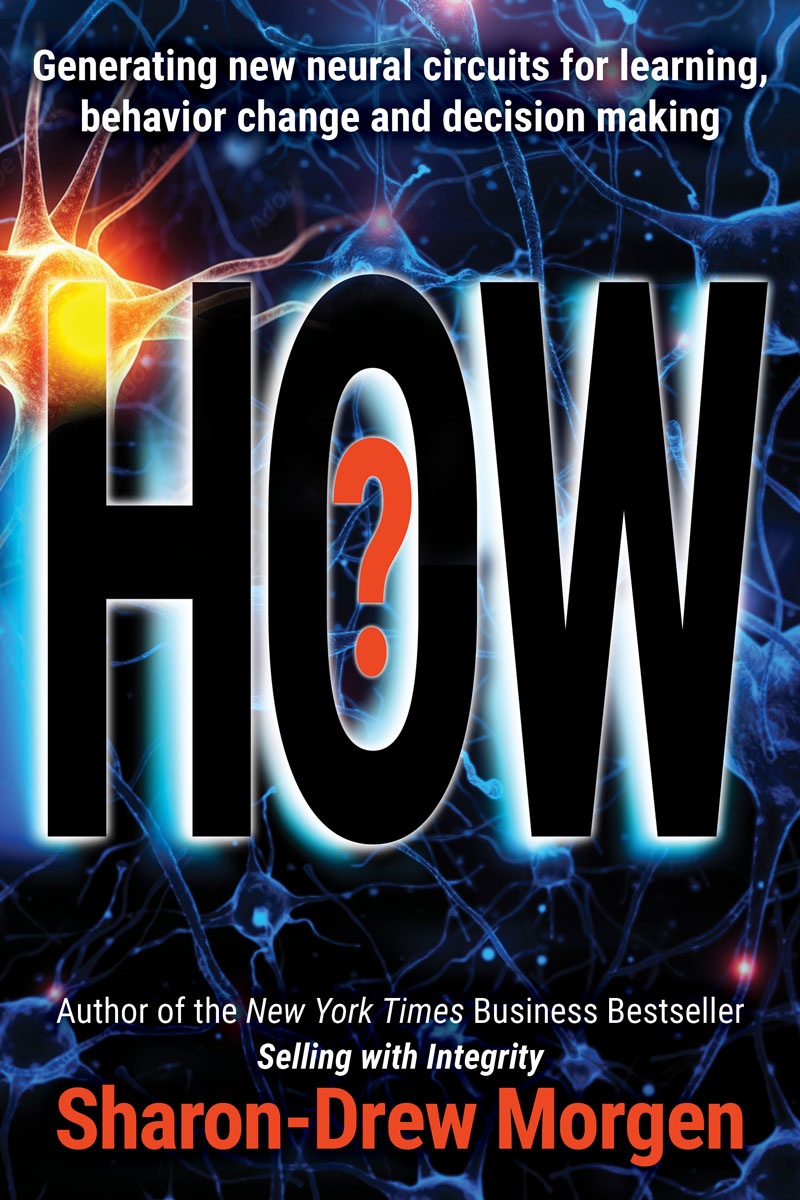
Misinterpreting incoming content: Due to the way brains ‘listen’, people only accurately understand 10-35% of the information offered. I wrote a book on this.

Managing the status quo: We are each comprised of several systems administered by our mechanical brain processes. New decisions threaten the status quo and must be approved by the system so it doesn’t feel at risk. Again, decision making is a brain thing, not a mind thing.
Repositioning/reevaluating belief hierarchy: Making a final decision involves a process of weighting values, history, assumptions, and cultural norms and comparing them against future gains/losses…a process unique to each individual and largely unconscious.
Comparators: All change/values-based decisions require comparing historic activity and the decisions that led to the status quo.
Once these have been addressed AND the risk of change is less than maintaining the status quo, users are ready to make a decision and information is needed.
Currently, AI doesn’t handle this. But it could. After all, the time it takes folks to figure out and manage their values criteria is the length of the decision path – a necessary element in making a decision to change or handle feelings.
AI DOESN’T FACILITATE PERSONAL DECISION MAKING
The next impediment to facilitating people through to new decisions and change is questions.
Questions are the primary tool used to prompt an AI search. But these merely lead to information retrieval and don’t get to the unconscious, systemic elements necessary for values-based decision making. Here’s why.
- Standard questions elicit data and are biased by the wording, intent, and goals of the questioner – often applying wrong assumptions that may not discover useful or accurate answers.
- Due to the way brains ‘listen’ (filled with distortions and deletions) listeners accurately hear/understand only 10-35% of what’s been said: what we hear, or read will be translated into some version of what we’ve heard or read before and not necessarily an accurate interpretation
- AI offers stock questions in hopes of inspiring introspection and can help users feel better. But these, largely, don’t enable values-based, personal decisions for change or reevaluation.
To lead users through their unconscious decision-making process to generate new, values-based decisions, AI can use a new rules-based capability to sequence the user’s values-based criteria – necessary for making good decisions, efficiently. This would be great for coaching, personal decision-making, customer support and sales.
I’ve developed a facilitation model (FacilitationAI) that enables AI to generate specific sequences and unique queries that match a user’s decision criteria and sends to neural circuits where new decisions are initiated that cause change, relief, and implementation.
FACILITATIVE QUESTIONS™
As an original thinker, I became intrigued by the possibility of generating a new form of question (Facilitative Question™) that
- had no biases, assumptions, or principles that would prejudice the answers;
- would get to the specific, unconscious, neural circuits where values-based answers are stored.
I spent 10 years figuring out the elements involved in leading Askers to where their unconscious decisions are initiated:
- the sequence necessary to discover existing values, patterns, specific reference points;
- the specific words, sequences, and sentence structures that get to the specific neural circuits where choice criteria are held to enable congruent, systemic change while overriding bias;
- the ability to listen without bias to accurately formulate the next question needed in a decision-making sequence;
- the specific hierarchy of decision criteria that lead to a values-based decision.
FQs use specific words in specific sequences that get to specific parts of the brain for targeted decision making and congruent choice. They can provide a new area for AI:
- life/personal coaching;
- habit change;
- personal/team decision making;
- customer feedback.
I’m happy to discuss and provide examples in detail. Please contact me to discuss. sharondrew@sharondrewmorgen.com
_______________________
If you’re enjoying these Monday Articles, please subscribe to make sure you get them delivered to your inbox on Monday morning. I use no cookies, they’re free, and I never use the database to market. As an original thinker I offer these to share out-of-the-box ideas as part of my life’s work. And I’m always eager to hear your thoughts and start a conversation: sharondrew@sharondrewmorgen.com. Enjoy.
_______________________
 _______________________
Sharon-Drew Morgen is a New York Times Business Bestselling Author (Selling with Integrity) and 10 books on decision making, change facilitation, and communication models. She’s a recognized original thinker and inventor of systemic change models, including Buying Facilitation®, Learning Facilitation, Change Facilitation, and Facilitative Questions™, used in Sales, Change Management, System Dynamics, Behavior/Habit Change, Leadership, Team Dynamics, and Coaching. Sharon-Drew is a trainer, keynote speaker, coach, and management consultant. Her website www.sharon-drew.com offers 1000+ original articles. She can be reached at: sharondrew@sharondrewmorgen.com