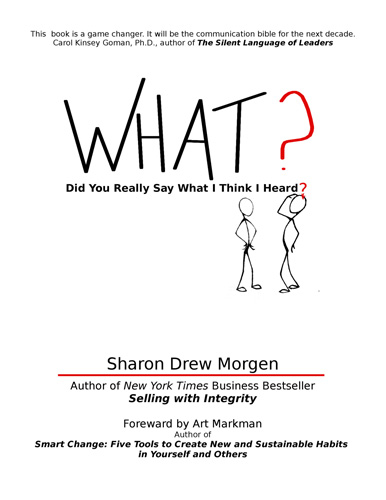
 Where does ‘common knowledge’ come from? I began wondering when writing my book on the gap between what’s said and what’s heard. I had thought I was an attentive listener and heard everything perfectly because, well, obviously, we all hear precisely what a speaker shares! Nope. Turns out we only accurately ‘hear’ 10-35% of what’s been said! My goodness! If that bit of common knowledge was wrong, what else was wrong?
With my new awareness I began keeping a list and found many common assumptions that we’ve all perpetuated. I’d like to share some – by no means a complete list – that we take for granted that have been proven untrue or at least face reasonable doubt as fail rates prevail in habit change, weight loss, implementations, selling, coaching, etc.

WHY NOT USE FAILURE AS A REASON TO CHANGE?
These erroneous norms (below) have been handed down for decades and built into many of our (business) practices. Sadly, due to their ubiquitous nature, they continue without even casting doubt (i.e. false assumptions like ‘people will buy once sellers find prospects with need’ – 95% failure; ‘habits can change permanently with behavior modification’ – 97% failure.).
Why is failure merely built-into the bottom line (hire 9x more sellers, i.e.) rather than changing assumptions? If we realize that change models achieve resistance in almost all projects, and over 70% of project fail, why not do something different and alleviate it by ensuring and managing buy-in before a project commences?
As you read these and find yourself resisting, remember: your assumptions are the norms through which you translate what’s been said and restrict your curiosity, your behaviors, your choices. We are all hampered by their universal repetition and imbedded use, following us into daily life: scientific research, college programs; healthcare, behavior change….
This article will hopefully broaden your world view, inspire further thought, or at least cause you to do some research. Or maybe just make you angry.
– – – – – – – – – – – – – – – – – – –
Behaviors are standalone events and pop up as needed.
Resistance is a natural element during change.
Selling causes buying.
People don’t consider the risk when making choices.
You can change a behavior with habit change and behavior modification.
People who are homeless got that way through mistakes they’ve made.
A reduced calorie intake maintains weight loss.
Good information will produce a new decision, cause learners to learn, people to buy, and patients to change their behaviors.
Statins are the only way to reduce cholesterol and there are no natural remedies that are more effective (Hint: Red Yeast Rice).
The toilet seat should be down.
I am speaking with the decision maker.
Choice comes from conscious decision making.
Sellers can understand what buyers need; meetings are important to the sales process.
Implementation occurs when clients are given a good solution.
Learning occurs when new information is presented.
Neuroplasticity occurs when the brain experiences new inputs.
Doctors have the answers. We will heal if we follow their suggestions.
Breakfast is the most important meal of the day.
The only remedy for a bad, painful hip is a hip replacement.
Agave is healthy. Butter, ice cream, and fats are bad for you. Eggs have too much cholesterol.
Mick Jagger is the leader of the Rolling Stones.
Castor oil makes you healthy.
If we listen intentionally/carefully/attentively, we will accurately understand what’s been said.
Eye blinks are so short they don’t affect our vision.
Everyone interprets specific words the same way.
There’s such a thing as objectively rational.
The role of a coach is to impart knowledge/wisdom.
Leaders understand enough about a problem to set the goal for a project.
We can figure out what’s really going on by noticing behavioral problems.
Mind and Brain are interchangeable.
Our curiosity is infinite.
We can learn and retain new knowledge when we hear it.
Good questions elicit good, accurate answers.
Permanent, resistance-free change is possible when good information is known and practiced.
When we believe/recognize an idea/answer to be a good one, it probably is.
Intuition is not restricted.
People over 70 aren’t horny anymore.
We interpret words according to their meaning.
People will buy when they’ve understood how a specific solution will fix their problem; an appropriate solution will generate a buying decision.
If you hunch over and raise your shoulders you’ll get warm.
Voice bots and virtual receptionists can take care of customers as well as live receptionists.
Memories are accurate renditions of what occurred.
It’s possible to accurately hear what Others say.
– – – – – – – – – – – – – – – – – – –
I hope these cliches prompted some thoughts! And for being so supportive and reading this far, here two gems: a present: the amount of time football players actually physically play is 11 minutes; If you add up the time you’re functionally blind when you blink, you’ve been unsighted for 23 minutes a day. SD
__________________________

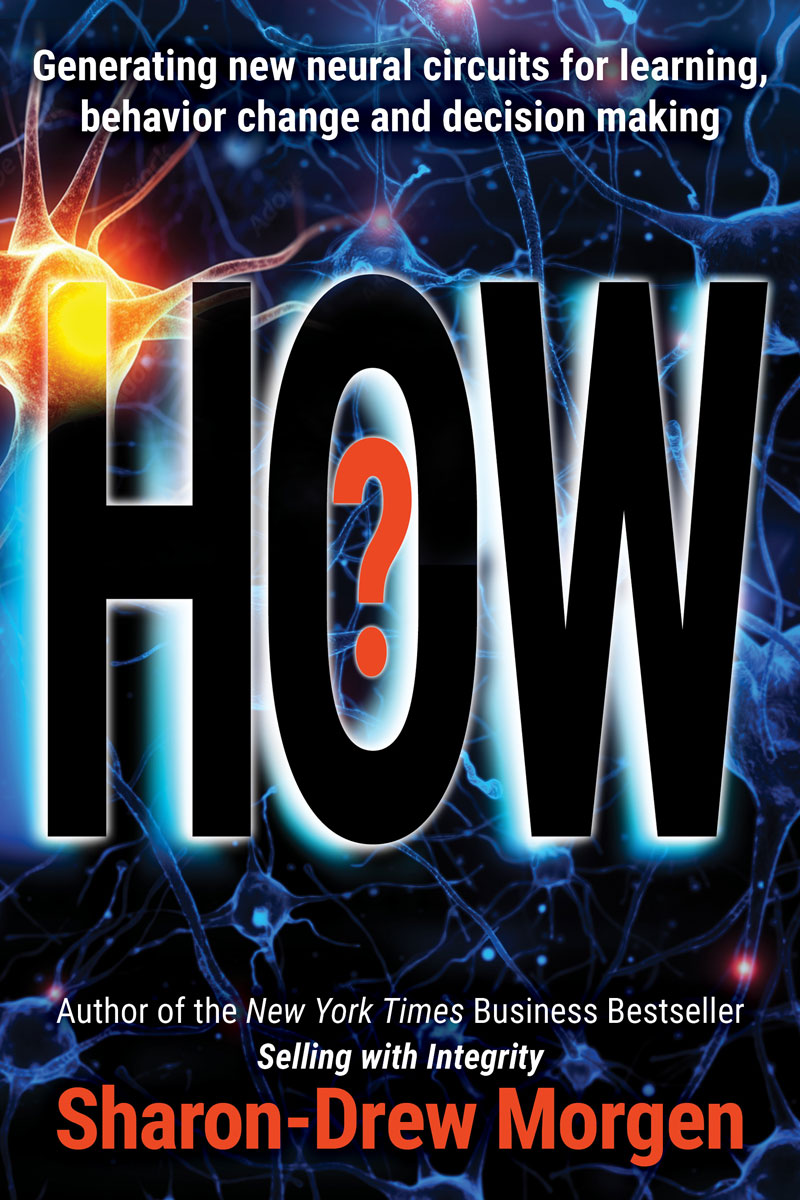
Sharon-Drew Morgen is a breakthrough innovator and original thinker, having developed new paradigms in sales (inventor Buying Facilitation®, listening/communication (What? Did you really say what I think I heard?), change management (The How of Change™), coaching, and leadership. She is the author of several books, including her new book HOW? Generating new neural circuits for learning, behavior change and decision making, the NYTimes Business Bestseller Selling with Integrity and Dirty Little Secrets: why buyers can’t buy and sellers can’t sell). Sharon-Drew coaches and consults with companies seeking out of the box remedies for congruent, servant-leader-based change in leadership, healthcare, and sales. Her award-winning blog carries original articles with new thinking, weekly. www.sharon-drew.com She can be reached at sharondrew@sharondrewmorgen.com.