
 Do you know how you end up doing what you do? How you make those quick, natural, unconscious decisions? Certainly, there’s pondering when you make ‘important’ decisions.
But what about those that don’t demand much thought, that you’ve done so many times and assume are suitable? Do you know how they affect others? The risks involved that remain unspoken but certainly color ongoing activity and relationships?
Unless you know the consequences of your (unconscious) decisions, you can’t know the risks you face.
I’d like to share a story of how unconscious choices have consequences and offer some ideas to have more conscious choice.
CASE STUDY
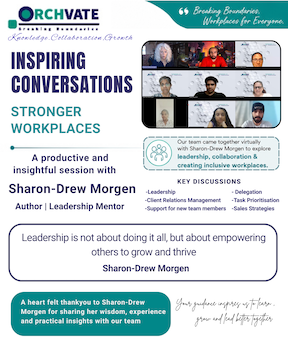
I mentor a wonderful company in India (Orchvate), led admirably by two visionary women (Panchali Banderjee and Geethanjali Ganapathy) that trains, places, and supervises neurodiverse people into Indian corporations. In a world where diversity, especially neurodiversity, is still not easily accepted in corporate environments, their important work provides both people and companies terrific services and opportunities.
One of my jobs has been to assist Orchvate in building a structure that’s less dependent upon the founders and more organized around growth, supervision, authenticity and servant-leadership.
After a recent monthly team meeting – our second, conceived to ensure all would be involved in cultivating a cohesive culture – I noticed leadership had failed to send out a ‘thanks for attending’ follow up notice.
I wrote Panchali reminding her to send a follow up with a cc to me. What I received was cut and dry – a great effort (to the point, professional, and practical) but lacked the kindness, support, acceptance and inclusion we were trying to engender.
I wondered how she decided to use those words and tone after all our discussions. Here was our conversation.
SD: How did you decide to write the note the way you did?
P: I didn’t decide.
SD: But you did. You chose the words and the tone. Everything we all do involves choosing some things over others.
P: I just wrote it. It was something I needed to do.
SD: Just because your decisions weren’t conscious didn’t mean you didn’t make decisions. You just made them unconsciously.
P: Oh! I never realized I needed different choices!
SD: Most leaders do the same thing – assume their natural choices are effective – without realizing there may be unintended consequences. Let’s figure out when you must make choices more consciously. Remember when you sat down to write this. What comes up?
P: That I needed to get it done.
SD: So this was a task, a DOing (the quantitative) rather than using it to connect authentically – a BEing (the qualitative)? Did you realize you omitted the way you usually speak from your heart that makes it so easy to connect with you?
P: I never consciously thought of it! It was a task. I realize now I tend to treat certain things as tasks to be done rather than moments of connection.
SD: So your DOing is a task orientation that excludes the BEing! Huh. Hopefully next team email will combine the two, maybe by using ‘kindness, authenticity, connection’ as your goal or task.
P: I could do that!
CONCLUSION
Choice. The essential element necessary to recognize the risks that emerge from unconscious decisions.
For those of you wanting to try generating decisions more consciously, here are some Facilitative Questions™ to help you going forward:
- How will I know that something deserves my time to stop and deliberately consider my full range of choices before doing what comes naturally? To include both the DOing and the BEing where it’s appropriate?
- How can I trigger myself to consider the unspoken – but real – risks that each communication from me produces, before I send anything out?
- What new skills must I learn so my communications match our beliefs, to help the teams and supervisors incorporate them into their work?
- What do I need to think of to remember to use qualitative words and include kindheartedness in my messages?
Panchali was initially unaware that her choices represented a risk to the changes we were instituting. But this problem isn’t hers alone. Most leaders respond to their tasks without conscious choice, certainly not realizing the consequences.
How will you know when you need additional choices beyond your automatic decisions to ensure you’re conveying the essential elements that will avoid risks and assure your best outcome?
______________________

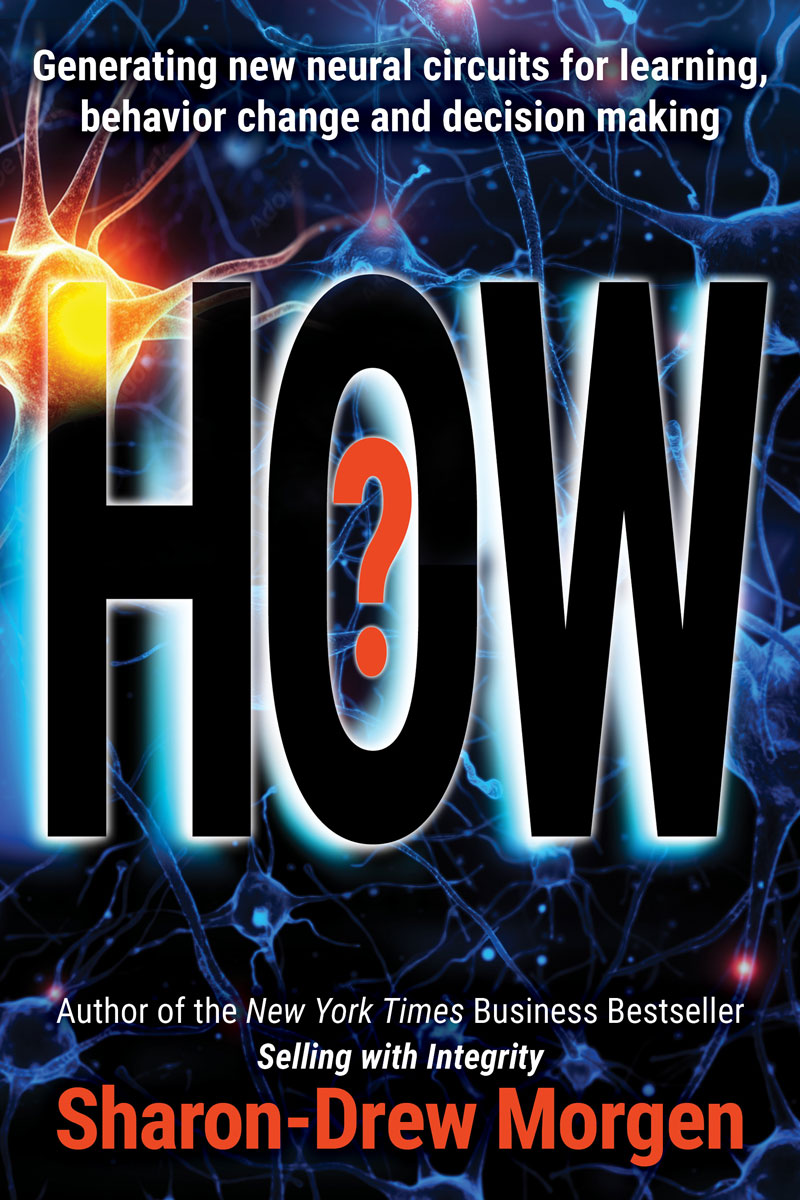
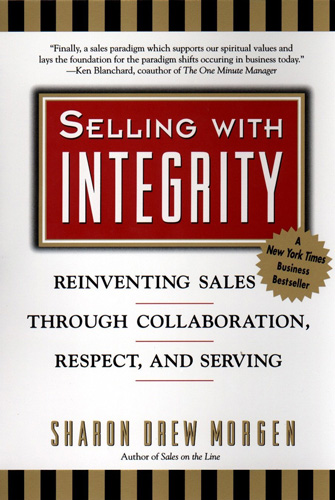
Sharon-Drew Morgen is a breakthrough innovator and original thinker, having developed new paradigms in sales (inventor Buying Facilitation®, listening/communication (What? Did you really say what I think I heard?), change management (The How of Change™), coaching, and leadership. She is the author of several books, including her new book HOW? Generating new neural circuits for learning, behavior change and decision making, the NYTimes Business Bestseller Selling with Integrity and Dirty Little Secrets: why buyers can’t buy and sellers can’t sell). Sharon-Drew coaches and consults with companies seeking out of the box remedies for congruent, servant-leader-based change in leadership, healthcare, and sales. Her award-winning blog carries original articles with new thinking, weekly. www.sharon-drew.com She can be reached at sharondrew@sharondrewmorgen.com.
1 thought on “Are Your Unconscious Decisions Risking Excellence? by Sharon-Drew Morgen”
Sharon‑Drew Morgen,
This has been an important learning moment for me.
I am a doer by nature — things need to get done, to‑do lists need to be ticked off — and in the process, I’m realizing how easily connection can take a back seat.
This piece brought that into sharp focus — how many of our choices are unconscious, and how they shape tone, relationships, and outcomes.
Thank you for capturing these underlying patterns so clearly, and for your guidance along the way.